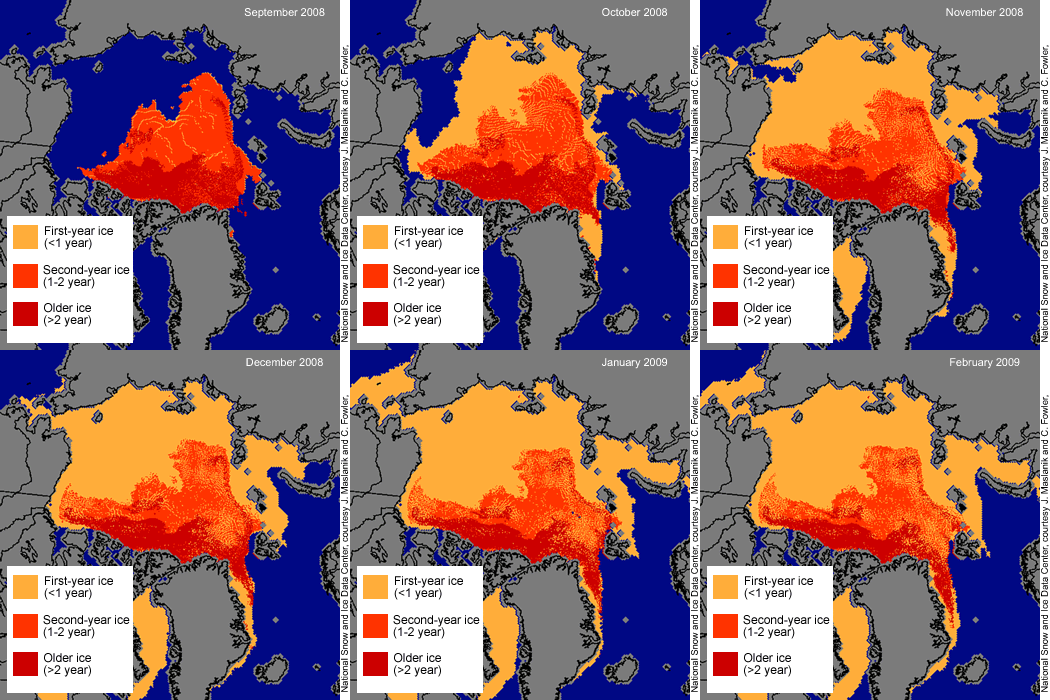
The Arctic is experiencing some of the world’s most dramatic and rapidly evolving effects from climate change. Increasing air and ocean temperatures, thawing permafrost, loss of sea ice, and shifts in ecosystems are evidence of widespread and dramatic ongoing change. Critical environmental, economic, and national security issues are emerging that affect lives and livelihoods in coastal communities and inland areas across the region. NOAA’s diverse capabilities to address these emerging issues are the backbone of the strategy.
“As part of the Administration commitment to ensuring that offshore oil and gas decisions are based on science and sound information, the U.S. Geological Survey will examine and summarize what information is available about the Arctic and what knowledge gaps may exist regarding environmental sensitivities, including impending climate change, and other factors that would be considered in decisions about potential future development in the Chukchi and Beaufort Seas.”
As Emmerson says, “Our ideas of the Arctic – permanent, pristine, unchanging – will persist long after they have been overtaken by Arctic change.”
The rapidly advancing erosion of shoreline is an obvious threat the existence of coastal villages in Alaska. This threat effects both wildlife habitat and culturally important sites.
In closing hours of the Bush Administration, new National Security and Homeland Security Presidential Directives were issued that address arctic region policy for the United States. A key statement found in the documents reinforces the notion that the United States is an Arctic nation.
An inability to comprehend the great distances found in Alaska is a realization newcomers often encounter in the Great Land. Alaska defies their attempts to compare it with past experiences. Terrain varies immensely and distances between regions are vast. A useful way to understand Alaska is consider it as six states within a much greater [...]
Scientists with the USGS believe sea-surface temperatures that existed during the mid-Pliocene era that were too warm to support sea ice during the summer season.
Currently sea ice covers some 1.8 million square miles of the arctic during the summer season. Recent research expects the ice extent to rapidly decrease over the next 30 years to an average area of 390,000 square miles, which is a much shorter period than previous anticipated. Muyin Wang and James Overland had their study [...]
Time is Short to Comment on Proposed NOAA Arctic Vision and Strategy
The Arctic is experiencing some of the world’s most dramatic and rapidly evolving effects from climate change. Increasing air and ocean temperatures, thawing permafrost, loss of sea ice, and shifts in ecosystems are evidence of widespread and dramatic ongoing change. Critical environmental, economic, and national security issues are emerging that affect lives and livelihoods in coastal communities and inland areas across the region. NOAA’s diverse capabilities to address these emerging issues are the backbone of the strategy.