
Alaska Clean Harbors Certification Program

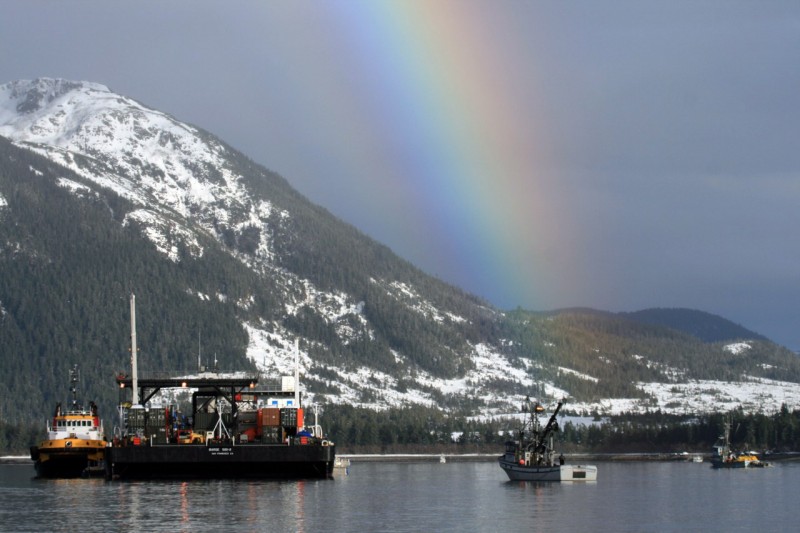
Several organizations have come together to keep Alaska’s boat harbors clean and protect the environment. The Alaska Clean Harbors Certification Program offers guidance to harbormasters and marina managers on how to operate their mooring facilities in an eco-friendly way.

Natural resource agencies in Alaska have historically focused on preventing major pollution and oil spill incidents. Those of us working on the waterfront know that there are many smaller pollution incidents occurring in our harbors everyday. The Alaska Clean Harbors Guidebook was developed to provide harbormasters with information on best management practices and provides the framework for harbors interested in participating in a clean harbor certification program.

The Alaska certification effort took the best features of clean marina programs found elsewhere in the country and customized them to specific conditions found in Alaska. Harbors interested in becoming certified by the program need to look at the measures they take to deal with solid wastes, liquid wastes, hazardous materials, petroleum products, vessel maintenance, sewage, vessel operations and facility management. Read More »

Posted in Environment | Tagged , | Leave a comment

Pathfinder Grounding Investigation Released by Coast Guard

By Alan Sorum.

On December 23, 2009, Crowley Maritime Corporation’s tugboat Pathfinder was serving as an ice scout vessel in Prince William Sound. At about 6:18 pm that evening, the 136-foot vessel ran aground on Bligh Reef, the same reef on which the Exxon Valdez grounded twenty years earlier.

The grounding of the Pathfinder caused extensive damage to its hull opening two fuel tanks along its centerline. Crowley initially estimated that 6,410 gallons of diesel fuel were released into the water, based on its estimate of the amount of fuel in the tanks at the time of the incident. However, when the vessel was subsequently dry-docked, 1,088 gallons of diesel were found remaining in the damaged fuel tanks, resulting in Crowley reducing its estimate of the amount spilled to 5,322 gallons.

The Coast Guard’s official report on the Pathfinder incident, released in May of this year, lists a number of factors that contributed to the event. At the root of these factors lies a story of inattention and complacency on the part of the tug’s master and crew, resulting in their failure to follow standard procedures, poor communication between them, and a loss of situational awareness.

The Pathfinder’s mission was to help protect the Sound’s environment by serving as an ice scout. Crowley is known for its professionalism and the tug’s grounding shook management of the company to its core. The company stepped up to address issues related to the incident and was painfully honest after the incident about the mistakes and omissions of its crew. Read More »

Posted in Environment, Transportation | Leave a comment

Identifying Alaska Commercial Fishing Boats

Alaska Purse SeinerFishing vessels evolve to meet unique regional demands and fisheries. Commercial fishing is vital to the foundation of Alaska’s economy and industry history is closely tied to the state. Fishing boats must not only be safe and economical, but need to be designed to work the gear required of a fishery.

Types of Alaska Commercial Fishing Boats

A fishery is best described as the effort directed at harvesting a selected species of fish or seafood. Methods used to catch salmon aren’t the same as those for crab or halibut. Many times a fishing vessel can be identified first by the kind of fishing gear it carries. Read More »

Republished by Blog Post Promoter

Posted in Fishing | Tagged , , | Comments closed

Stabilizing Greenhouse Gasses Could Slow Loss of Arctic Sea-Ice and Benefit Polar Bears

Polar Bear on Thin IcePolar Bear on Thin Arctic Sea-Ice. U.S. Coast Guard Photo by Patrick Kelly

Polar bear habitat in Alaska is becoming an increasingly important concern to state residents.  Determinations are now being developed to quantify the amount of critical habitat required to preserve bear populations and these decisions could effect future resource development in Alaska.

A study conducted by the U.S. Geological Survey may shed light on the effects of greenhouse gas emissions on sea-ice losses in the Arctic. Researchers in the past have suggested that there is a “tipping point” at which loss of sea-ice would become irreversible. This new modeling study provides evidence that the current decline in sea-ice levels could be changed if greenhouse gas emissions could somehow be held steady. Read More »

Republished by Blog Post Promoter

Posted in Marine Ecosystems | Tagged , , | Comments closed

John Muir Comes to Alaska

Glacier on Stikine River - Alaska Vistas CompanyNaturalist John Muir first explored Alaska during a trip to the Island of Wrangell on July 14, 1879. Muir wasn’t impressed, saying “the most inhospitable place at first sight I had ever seen…There was nothing like a tavern or lodging-house in the village, nor could I find any place in the stumpy, rocky, boggy ground about it that looked dry enough to camp on until I could find a way into the wilderness to begin my studies.” Fortunately Muir fell into a group of Presbyterian missionaries that would leave their own historic mark on the state. One was the well-known Reverend Sheldon Jackson who started the Wrangell mission and was seen as a national spokesman on Alaskan affairs. Working with Benjamin Harrison, he obtained funds to begin a school system in the state and later established a self-named college in Sitka.

Another Fort Wrangell minister who befriended Muir was Samuel Hall Young who described Muir as a “lean, sinewy man of forty, with waving, reddish-brown hair and beard, and shoulders slightly stooped. He wore a Scotch cap and a long, gray tweed ulster…” Young accompanied Muir in many adventures, some that he have regretted. Read More »

Republished by Blog Post Promoter

Posted in Book Reviews, Historical, Natural History, Rivers | Tagged , , , , , , , | Comments closed

Enroll at the Alaska Seafood University

Alaska Seafood UniversityThe Alaska Seafood Marketing Institute (ASMI) is the State of Alaska Agency responsible for marketing its seafood resources. Funding for the Institute comes through a partnership formed by fishing industry, state, and federal interests.

This Agency promotes Alaska seafood, provides industry education on quality assurance and food safety, and provides consumers with new and interesting ways to serve Alaska’s bounty. AMSI has launched an online program to better educate the public and industry about Alaska seafood.

Alaska Seafood U

Alaska Seafood U (University) is aimed at retail seafood vendors, foodservice representatives, culinary students, and consumers. Program goals are to explain Alaska’s commitment to sustainable fisheries practices, fish and shellfish species, harvesting methods, health benefits, and nutrition information. Read More »

Republished by Blog Post Promoter

Posted in Cooking, Fishing | Comments closed

Alaska’s Copper River

pana0024Alaska’s Copper River has been navigated for trade and used for subsistence proposes since before the advent of recorded history. The river currently provides a rich Sockeye Salmon resource for commercial, personal use and subsistence fishermen. It is popular with paddle sports enthusiasts, offering many kayak and rafting adventures.

Location – Headwaters of the Copper River begin at the foot of Copper Glacier on the northern side of Mount Wrangell. From the glacier, the river flows some 287 miles to tidewater near Cordova and the Gulf of Alaska. The river runs through some the most rugged parts of the Wrangell-St. Elias National Park, the Chugach and Wrangell mountains. George Herben has written book called Picture Journeys in Alaska’s Wrangell-St. Elias that would interest visitors to the Park. Major tributaries, the Tanada, Slana, Chistochina, Sanford, Gakona, Gulkana, Tonsina, Kotsina, Chitina, Tiekel, Tasnuna, Bremner, Wernike, Allen, and Martin rivers add to its volume while reaching the Pacific Ocean. This river’s watershed drains more than 24,000 square miles of land. Read More »

Republished by Blog Post Promoter

Posted in Historical, National Parks, Natural History, Outdoor Recreation, Rivers | Tagged , , , , | Comments closed

Arctic Region Underprepared for Maritime Accidents

arcticAt a conference sponsored by the University of New Hampshire (UNH) and the National Oceanic and Atmospheric Administration (NOAA) held at the UNH Coastal Response Research Center (CRRC); arctic researchers, indigenous people, industry representatives and government officials concluded that the infrastructure needed to respond to an emergency like an oil spill or vessel collision in the Arctic Ocean is inadequate.

With the seasonal transit of the Northwest Passage becoming a reality, an increase in Arctic shipping traffic is inevitable. The energy, fishing, shipping and cruise industries all see opportunities for their operations in the Arctic Ocean.

UNH CRRC Co-Director Nancy Kinner says of the issue, “The reduction of polar sea ice and the increasing worldwide demand for energy will likely result in a dramatic increase in the number of vessels that travel Arctic waters. As vessel traffic increases, disaster scenarios are going to become more of a reality.” Read More »

Republished by Blog Post Promoter

Posted in Environment, Marine Ecosystems, Transportation | Tagged , | Comments closed