

John Muir Comes to Alaska

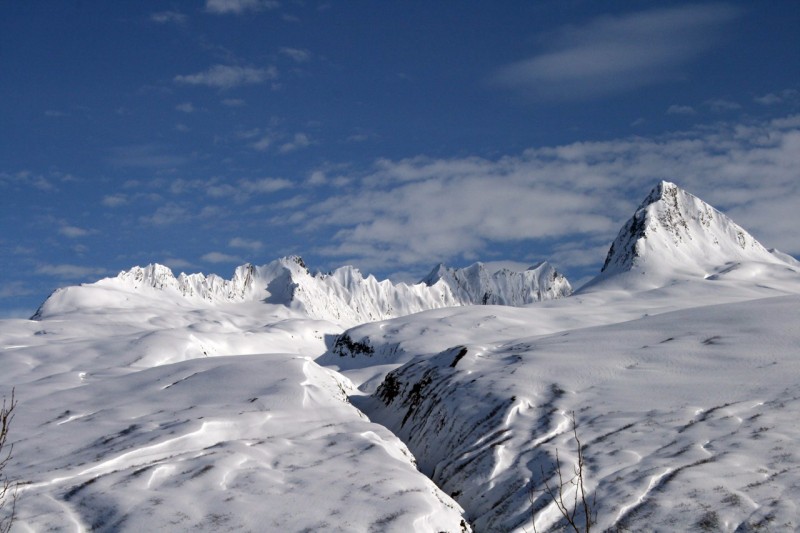
Glacier on Stikine River - Alaska Vistas CompanyNaturalist John Muir first explored Alaska during a trip to the Island of Wrangell on July 14, 1879. Muir wasn’t impressed, saying “the most inhospitable place at first sight I had ever seen…There was nothing like a tavern or lodging-house in the village, nor could I find any place in the stumpy, rocky, boggy ground about it that looked dry enough to camp on until I could find a way into the wilderness to begin my studies.” Fortunately Muir fell into a group of Presbyterian missionaries that would leave their own historic mark on the state. One was the well-known Reverend Sheldon Jackson who started the Wrangell mission and was seen as a national spokesman on Alaskan affairs. Working with Benjamin Harrison, he obtained funds to begin a school system in the state and later established a self-named college in Sitka.

Another Fort Wrangell minister who befriended Muir was Samuel Hall Young who described Muir as a “lean, sinewy man of forty, with waving, reddish-brown hair and beard, and shoulders slightly stooped. He wore a Scotch cap and a long, gray tweed ulster…” Young accompanied Muir in many adventures, some that he have regretted. Read More »

Republished by Blog Post Promoter

Posted in Book Reviews, Historical, Natural History, Rivers | Tagged , , , , , , , | Comments closed

Enroll at the Alaska Seafood University

Alaska Seafood UniversityThe Alaska Seafood Marketing Institute (ASMI) is the State of Alaska Agency responsible for marketing its seafood resources. Funding for the Institute comes through a partnership formed by fishing industry, state, and federal interests.

This Agency promotes Alaska seafood, provides industry education on quality assurance and food safety, and provides consumers with new and interesting ways to serve Alaska’s bounty. AMSI has launched an online program to better educate the public and industry about Alaska seafood.

Alaska Seafood U

Alaska Seafood U (University) is aimed at retail seafood vendors, foodservice representatives, culinary students, and consumers. Program goals are to explain Alaska’s commitment to sustainable fisheries practices, fish and shellfish species, harvesting methods, health benefits, and nutrition information. Read More »

Republished by Blog Post Promoter

Posted in Cooking, Fishing | Comments closed

Alaska’s Copper River

pana0024Alaska’s Copper River has been navigated for trade and used for subsistence proposes since before the advent of recorded history. The river currently provides a rich Sockeye Salmon resource for commercial, personal use and subsistence fishermen. It is popular with paddle sports enthusiasts, offering many kayak and rafting adventures.

Location – Headwaters of the Copper River begin at the foot of Copper Glacier on the northern side of Mount Wrangell. From the glacier, the river flows some 287 miles to tidewater near Cordova and the Gulf of Alaska. The river runs through some the most rugged parts of the Wrangell-St. Elias National Park, the Chugach and Wrangell mountains. George Herben has written book called Picture Journeys in Alaska’s Wrangell-St. Elias that would interest visitors to the Park. Major tributaries, the Tanada, Slana, Chistochina, Sanford, Gakona, Gulkana, Tonsina, Kotsina, Chitina, Tiekel, Tasnuna, Bremner, Wernike, Allen, and Martin rivers add to its volume while reaching the Pacific Ocean. This river’s watershed drains more than 24,000 square miles of land. Read More »

Republished by Blog Post Promoter

Posted in Historical, National Parks, Natural History, Outdoor Recreation, Rivers | Tagged , , , , | Comments closed

Arctic Region Underprepared for Maritime Accidents

arcticAt a conference sponsored by the University of New Hampshire (UNH) and the National Oceanic and Atmospheric Administration (NOAA) held at the UNH Coastal Response Research Center (CRRC); arctic researchers, indigenous people, industry representatives and government officials concluded that the infrastructure needed to respond to an emergency like an oil spill or vessel collision in the Arctic Ocean is inadequate.

With the seasonal transit of the Northwest Passage becoming a reality, an increase in Arctic shipping traffic is inevitable. The energy, fishing, shipping and cruise industries all see opportunities for their operations in the Arctic Ocean.

UNH CRRC Co-Director Nancy Kinner says of the issue, “The reduction of polar sea ice and the increasing worldwide demand for energy will likely result in a dramatic increase in the number of vessels that travel Arctic waters. As vessel traffic increases, disaster scenarios are going to become more of a reality.” Read More »

Republished by Blog Post Promoter

Posted in Environment, Marine Ecosystems, Transportation | Tagged , | Comments closed

Efforts to Restore the Good Name of Denali

ala00100Denali is the tallest mountain peak in North America, rising to 20,320 feet (6,194 meters) above sea level in Interior Alaska. The mountain is unique among the great summits, it rises from its base alone and isn’t part of an associated mountain range complex. Athabaskan people have occupied the region for centuries with evidence of earliest human habitation occurring some 12,000 years ago and to the first people of Alaska, the mountain has been known as Denali or the Great One for literally thousands of years.

It was in 1896 that a gold prospector named William Dickey advocated the naming of the mountain for the Republican Presidential nominee at the time, William McKinley. Dickey suggested the name in part because of McKinley’s support for a gold standard. McKinley never had a connection to Alaska or Denali. Most Alaskans still refer to the mountain as Denali.

Read More »

Republished by Blog Post Promoter

Posted in Historical, National Parks | Tagged , | Comments closed

A Review of Wild Seafood Sustainability Certification Programs

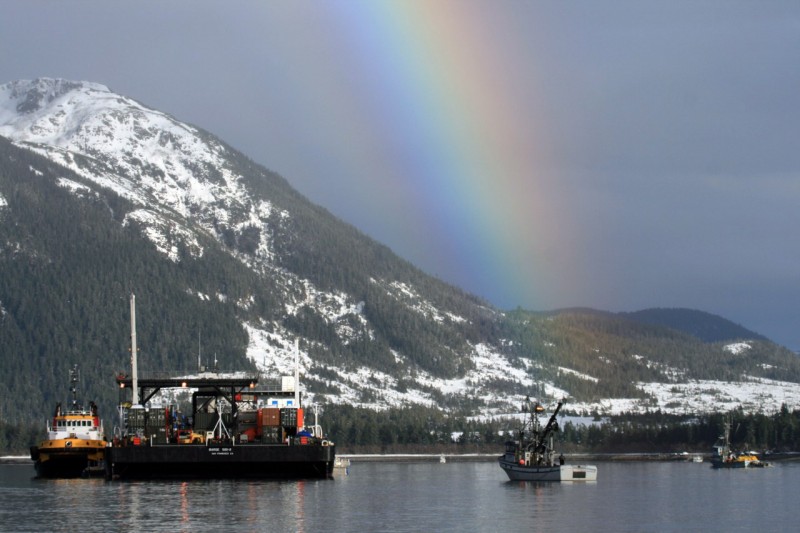
A Snowy Valdez, Alaska Harbor Photo: Alan SorumProducers of wild Alaskan seafood understand how important it is for our fisheries to be managed on a sustainable basis. Methods employed to meet this need include use of enforceable catch limits, improving catch efficiency, limiting fishing efforts and implementation of quota share programs.

Since many fisheries in the world do not strive to meet similar goals, Alaska is keen to alert consumers about the sustained yield practices used in the state. One way to achieve this goal is to use an independent, third party to certify seafood in Alaska is being harvested on a sustainable basis. Several Alaska fisheries, like those directed at the five species of Pacific salmon are certified as sustainable by a group known as the Marine Stewardship Council (MSC) and bear an ecolabel that can easily be recognized by seafood consumers.

World Wildlife Fund Seafood Ecolabel Program Study

The World Wildlife Fund (WWF) commissioned Accenture Development Partnerships to make an independent assessment of seafood sustainability certification programs. The study, Assessment Study of On-Pack, Wild-Capture Seafood Sustainability Certification Programmes and Seafood Ecolabels. Accenture, was recently released and looked at seven certification programs that use ecolabels targeted at seafood consumers.

Using criteria established by the World Wildlife Fund, Accenture assessed the fisheries management claims made by these ecolabeling schemes. Criteria addressed in the study included consideration of climate change, evaluation of supply chain facilities, impacts made to fish and ecosystems, social and ethical practices, and humane treatment of animals.

The executive summary of the report states, “None of the standards analysed are in complete compliance with the criteria identified and defined by WWF as necessary for credible ecolabels or certification programs. The Marine Stewardship Council (MSC) is the only ecolabel that is close enough to be considered compliant with these criteria.” Read More »

Republished by Blog Post Promoter

Posted in Marine Ecosystems | Tagged , , | Leave a comment

Alaska Marine Safety Instructor Training MSIT

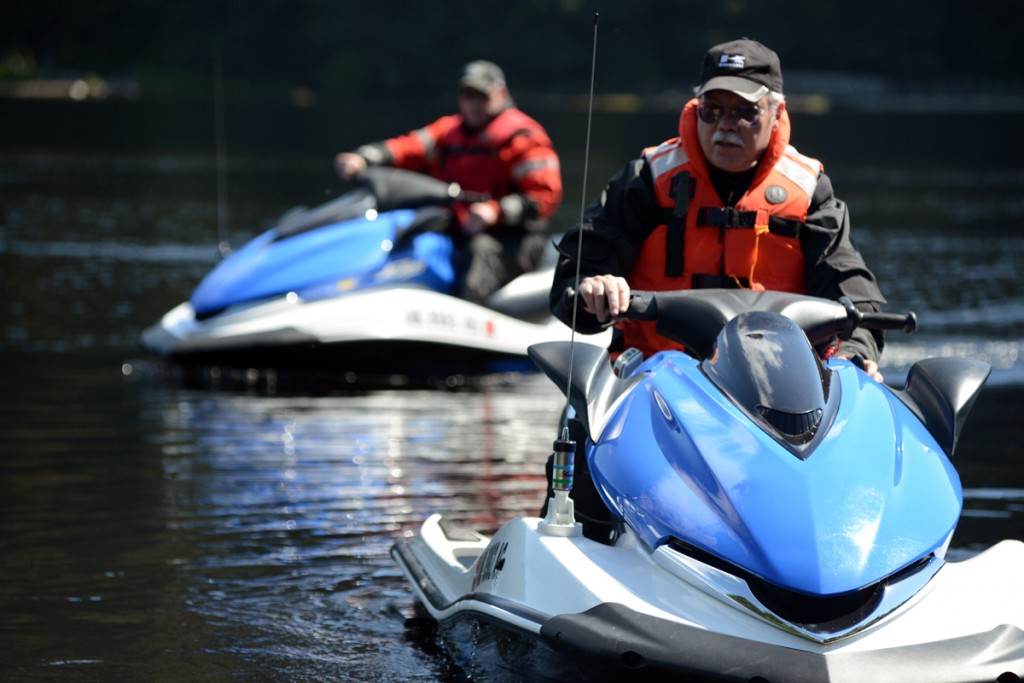
AMSEA Survival Suit TrainingThe Alaska Marine Safety Association (AMSEA) is well known in the maritime community for being committed to improving wellbeing on the water for both recreational and commercial boaters. The Marine Safety Instructor Training (MSIT) course is the Association’s premier train-the-trainer course designed to train future instructors to effectively teach cold water survival techniques, use of marine safety equipment, and to conduct onboard safety drills. The MSIT course is an intensive experience taking 48 hours over six and a half days to complete.

About the Alaska Marine Safety Association (AMSEA)

AMSEA is nonprofit corporation identified by the Internal Revenue Service (IRS) as a public charity under IRS Code 501(c) 3, dedicated to providing information and training that addresses cold water safety. The Association is known for its practical hands-on training style.

Since AMSEA began in 1985, the group has trained 975 marine safety instructors and over 400 teachers from across the United States who have gone on to provide cold water safety training to more than 200,000 people ranging from school children to commercial fishermen.

AMSEA’s Mission Statement is, “To reduce injury and death in the marine and fresh water environment through education and training provided by a network of qualified marine safety instructors.” Read More »

Republished by Blog Post Promoter

Posted in Organizations | Tagged , , , | Leave a comment

The Total Outdoorsman Manual: Learn to hunt, fish, and camp like an expert

Author T. Edward Nickens is an experienced outdoorsman and noted outdoor writer who works as editor-at-large for Field and Stream magazine. Partnering with the firm Weldon Owen, known for their ability to craft quality, illustrated, nonfiction books and the widely recognized outdoor magazine Field and Stream, Nickens has gathered together hints on how to master some 374 skills that should interest all outdoor enthusiasts.

Essential Outdoor Skills Broken into Four Sections

In its first three sections, The Total Outdoorsman Manual outlines the techniques fundamental for successful camping, fishing and hunting adventures. A fourth section of the text highlights outdoor survival skills that can improve safety and lower the risk of injury. Once mastered, the skills presented by Nickens and his fellow contributors will greatly improve the competence and ability of any interested outdoorsman.

What’s great about the The Total Outdoorsman Manual is that there is no need to read the text in any sequence. Pick a skill of interest and learn to master it. The text effectively uses clear photographs and step-by-step illustrations to convey these skill techniques.

Read More »

Posted in Book Reviews | Tagged , , , , , | Leave a comment